Master Tone and Intonation in English to Convey Emotion Effectively: 10 Ways
Learn how to use tone and intonation in English to express emotions accurately. Discover tips to sound friendly, avoid misunderstandings, and manage sarcasm in communication.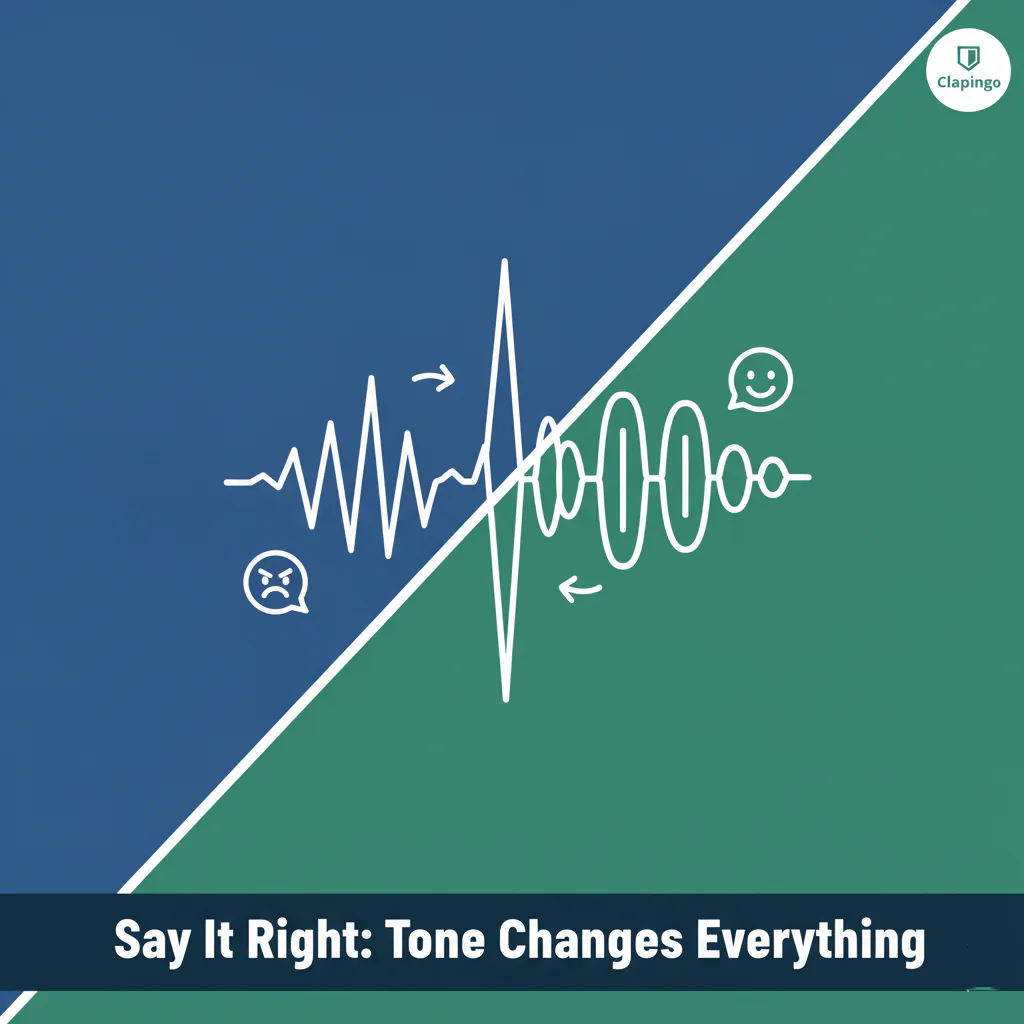
The Hidden Power Behind Your Voice
Words carry meaning, but how you say them can completely change that meaning.
Imagine saying “I’m fine” with a cheerful tone versus a flat one. The first feels friendly, the second sounds irritated, and the third might even sound sarcastic.
That’s the magic of tone and intonation in English — they transform simple words into emotional expressions.
For professionals, learners, and anyone speaking English in global contexts, mastering tone and intonation is essential to avoid misunderstandings, sound friendly and build trust.
What Are Tone and Intonation in English?
In simple terms:
Tone = Emotion
Intonation = Melody
Together, they create your vocal emotion, the emotional color of your speech.
Why Tone and Intonation Matter in English
In multicultural or professional communication, people often misread emotions because of tone confusion.
A polite “Could you help me?” may sound rude if your tone is too flat. Similarly, an attempt at humor may sound sarcastic if your intonation isn’t warm.
Key reasons they matter:
✅ To avoid misunderstandings
✅ To express empathy and friendliness
✅ To convey authority or confidence
✅ To make your English sound natural

The Science Behind Tone and Emotion
Research shows that over 38% of emotional meaning in communication comes from tone and intonation, not words.
That’s why you can “hear” if someone’s upset — even without seeing their face.
Our brains quickly interpret pitch, rhythm, and loudness as emotional signals. For example:
High pitch → excitement or nervousness
Low pitch → seriousness or authority
Rising tone → questioning or uncertainty
Falling tone → completeness or confidence
Types of Intonation Patterns in English
1. Rising Intonation (↗️)
Used in yes/no questions, surprise, or uncertainty.
👉 “Are you coming?”
Sounds friendly and open.
2. Falling Intonation (↘️)
Used for statements, commands, or certainty.
👉 “I’ll call you later.”
Sounds confident and final.
3. Rise-Fall Intonation (↗️↘️)
Used to show impressed, surprised, or sarcastic tones.
👉 “Oh, really?” (sarcasm in English!)
4. Fall-Rise Intonation (↘️↗️)
Used for polite hesitation or partial agreement.
👉 “I suppose you’re right.”
Sounds thoughtful or gentle.
Tone and Emotion — How Your Voice Changes Meaning
Tone can completely shift the emotional meaning of the same sentence:
This is why ESL learners must go beyond grammar — understanding how vocal emotion shapes interpretation.
Common Tone Mistakes ESL Learners Make
Monotone speaking: Sounds robotic or uninterested.
Overusing high pitch: Can sound nervous or childish.
Flat politeness: “Thank you” without warmth feels forced.
Sarcasm confusion: Trying to be funny but sounding rude.
Wrong emphasis: Saying “I didn’t SAY he stole it” vs. “I didn’t say HE stole it.”
Clapingo Tip: Record yourself and compare how native speakers vary their tone in daily English.
How to Sound Friendly and Confident
To sound friendly, focus on:
A slightly higher pitch at the end of phrases
Warm tone with moderate volume
Natural smiling while speaking (yes, people can hear it!)
To sound confident, try:
A steady, low tone
Clear enunciation
Avoiding nervous fillers like “uh” or “you know”
Practice Example:
Say “Good morning!” with three tones:
Cheerful (friendly colleague)
Flat (tired mood)
Sharp (angry tone)
Notice how each creates a different atmosphere.
How to Avoid Misunderstandings in English Conversations
Many English learners struggle when others misread their tone as rude or sarcastic.
Here’s how to fix that:
Checklist to Avoid Miscommunication:
✅ Listen to intonation in English movies and podcasts
✅ Avoid too flat or too sharp tones
✅ Use positive sounds — “uh-huh,” “mm-hmm,” to show engagement
✅ Keep eye contact and body language aligned with your tone
Sarcasm in English — The Tricky Tone
Sarcasm depends almost entirely on tone.
Words may sound polite, but the rising-falling pattern signals mockery or humor.
Example:
“I just love working on weekends.” (Sarcastic)
Tone drops slightly in the middle, then rises again — a classic sarcastic pattern.
Tip: Sarcasm doesn’t always translate well across cultures.
In business English, use it carefully to avoid misunderstanding.
Practicing Tone Awareness — The 3-Step Technique
Listen: Choose short clips of native English conversations.
Imitate: Repeat the same sentences matching pitch and emotion.
Record: Compare your recording to the original — do you sound natural?
Try apps or tools that visualize pitch curves, they help track your progress.
Emotional Tone Categories (with Examples)
The Role of Cultural Context in Tone Perception
A “friendly” tone in India may sound “too casual” in Japan.
Similarly, British understatement may confuse American listeners.
When communicating globally:
Match formality level to the culture.
Pay attention to intonation differences between accents.
Avoid humor or sarcasm unless you’re sure it’s understood.
Did You Know?
In cross-cultural studies, Japanese speakers use pitch more than English speakers, while Indian English often blends rising tones even in statements, which may sound overly questioning to native speakers.
Tone in Professional Settings
1. In Meetings:
Use a calm, even tone to sound competent.
Avoid nervous rising intonation at sentence ends.
2. In Presentations:
Vary tone and pause strategically for emphasis.
3. In Emails or Calls:
Your tone substitutes for facial expression.
Smile before you speak — it changes your vocal warmth.
Clapingo Pro Tip:
When disagreeing, soften your tone:
Instead of “That’s wrong,” say, “I see your point, but maybe we could try this…”
Using Tone to Persuade and Inspire
A persuasive tone blends:
Passion (pitch variety)
Confidence (falling tones)
Empathy (gentle pace)
That’s why TED speakers sound engaging — they master the rhythm of English intonation.
How Clapingo Helps You Master Tone and Intonation
At Clapingo, learners practice English speaking with live tutors who focus on:
Tone correction
Intonation mapping
Emotional expression in speech
Accent and clarity improvement
You don’t just learn words — you learn how to sound confident, warm, and natural.
Quick Tone-Improvement Exercises
Mirror Practice: Watch your expressions as you speak.
Tone Ladder Drill:
Say: “Really?” → rise
“Really.” → fall
“Rea-lly!” → rise-fall
Read Aloud Challenge: Record short stories with changing tones.
Common English Phrases That Change Meaning with Tone
The Psychology of Voice — How Listeners Interpret Tone
When people listen to you speak, their brains subconsciously scan for emotional cues in your vocal emotion — tone, rhythm, and pitch.
Studies in communication psychology reveal that listeners judge trustworthiness, warmth, and confidence within the first 7 seconds of hearing your voice.
What Listeners Subconsciously Notice:
Pitch variation → Are you confident or anxious?
Speech rate → Are you rushed or relaxed?
Pausing → Do you sound thoughtful or uncertain?
Volume control → Are you calm or aggressive?
Clapingo Pro Insight:
If your tone doesn’t match your words, for example, saying “I’m happy for you” in a dull tone; the listener’s brain trusts the tone more than the words.
Tone and Gender — How Men and Women Use Voice Differently
Tone patterns often differ by gender, affecting how others perceive you in English communication.
Pro Tip:
Whether male or female, avoid extremes — monotone speech feels dull, while overly dramatic tone sounds unnatural.
Emotional Control — Using Tone to Manage Difficult Conversations
The right vocal emotion can turn a conflict into a calm discussion.
Tone doesn’t just express emotions — it also helps regulate them.
Practical Scenarios:
When someone’s angry: Keep your tone low and slow.
When correcting someone: Use a soft tone with steady pitch.
When giving feedback: Add warmth with slight upward intonation.
Emotional Control Exercise:
Before responding in a tense conversation, take a breath and lower your tone. It signals calm authority and prevents escalation.
The Role of Pausing and Rhythm in Tone
Tone isn’t just about pitch — it’s also about timing.
A well-placed pause can add emotion, suspense, or clarity to your message.
Tip: Use pauses like punctuation in speech — commas to breathe, periods to emphasize.
How Different English Accents Express Tone and Intonation
Different English accents naturally carry distinct intonation patterns.
This can cause unintentional misunderstandings in global communication.
Clapingo Insight:
Clapingo tutors help learners adapt tone for global clarity while keeping their natural accent authentic.

From Flat to Expressive — Transforming Your Voice Step by Step
If your English sounds flat or emotionless, here’s how to bring it to life.
🎙️ 3-Step Voice Upgrade Plan:
Pitch Practice:
Say “Hello!” in 3 moods: happy, serious, surprised.
Record and analyze your pitch movement.
Emotion Injection:
Read dialogues emphasizing joy, anger, or curiosity.
Rhythm Refinement:
Match your speech to rhythmic English songs or poetry.
Clapingo Pro Hack:
Try “shadowing” English speakers in interviews or films — copy their intonation in real time to internalize natural tone flow.
Tone in Storytelling and Presentations
Your tone and intonation in English are storytelling tools. They make facts memorable and ideas emotional.
Use Tone to Create Impact:
Rising tone to build tension
Falling tone for resolution
Soft tone for sincerity
Dynamic tone for excitement
Example:
“When I walked into the room…” (gentle tone)
“I couldn’t believe what I saw!” (sharp rise)
“It changed everything.” (falling tone for closure)
Tone helps listeners feel your story, not just hear it.
The Digital Dilemma — Tone in Online Communication
In remote work, emails and messages lack vocal emotion — which leads to misunderstanding.
Example:
“Sure.” — sounds neutral in writing but can feel rude without tone.
Fix It with Written Tone Markers:
Add emojis (🙂, 😉) for warmth
Use exclamation points sparingly for friendliness
Start messages with positive openers:
“Hope you’re doing well!” or “Thanks for your quick reply!”
Clapingo helps you practice spoken tone so your written communication also feels balanced, clear, and friendly.
Using Tone to Build Trust in Global Teams
In multicultural workplaces, tone determines how people perceive your professionalism and sincerity.
Tone That Builds Trust:
Warm greeting: “Hi everyone, great to see you all!”
Respectful disagreement: “That’s an interesting point — may I share another view?”
Encouraging close: “Let’s give it a try and see how it goes!”
Avoid:
Sharp falling tones (“No, that won’t work”) — they sound dismissive.
Instead, use balanced tone: steady, calm, and open — it shows collaboration.
How to Detect Others’ Tone and Respond Effectively
Tone mastery isn’t only about how you speak — it’s also about how you listen.
Listen for:
Rising tones → questions or hesitation
Falling tones → certainty
Flat tone → disinterest or fatigue
Respond Accordingly:
To a rising tone: encourage (“Yes, go on!”)
To a flat tone: re-engage (“Everything okay?”)
To a falling tone: close confidently (“That’s great, thanks!”)
Being tone-aware helps you avoid misunderstandings and respond empathetically.
Bonus – The Tone Tracker Table
Track your tone awareness each week:
Use this table weekly to measure your progress toward confident, emotionally intelligent English.
Speak to Be Understood, Not Just Heard
Tone and intonation are the soul of spoken English.
You can master grammar, pronunciation, and vocabulary — but without the right tone, you risk being misunderstood or misread emotionally.
The goal isn’t just to speak English correctly — it’s to connect through emotion.
Every pause, pitch shift, and emphasis tells your listener who you are.
Remember:
Your voice doesn’t just carry sound. It carries meaning, confidence, and heart.
Want to sound confident, friendly, and natural in English?
Join Clapingo — your personal English fluency coach.
Learn live with experts who teach you not just what to say, but how to say it — with the perfect tone, emotion, and confidence.
Tips & Tricks for Better Intonation
🎯 Stress key words, not all words.
🎧 Mimic natural speech from TV shows or podcasts.
💬 Use pauses to sound thoughtful.
🌈 Record yourself in different moods — happy, tired, calm — to build tone awareness.
🪞 Smile before speaking — it brightens your vocal emotion instantly.
Final Thoughts — Your Voice Is Your Personality
In English, words tell, but tone sells.
The right tone can make you sound warm, trustworthy, and professional — the wrong one can ruin even the best message.
So practice daily, experiment with pitch, and let your emotions guide your English.
Remember: Communication isn’t about what you say, it’s about how you make people feel.
Read Also: Power of Body Language in Communication: 10 Ways Clapingo Elevates Your Skills