Master Networking English for Professional Small Talk At Events & Conferences
Discover tips, strategies, and essential phrases to master professional small talk at conferences and business events. Improve your Networking English today with Clapingo.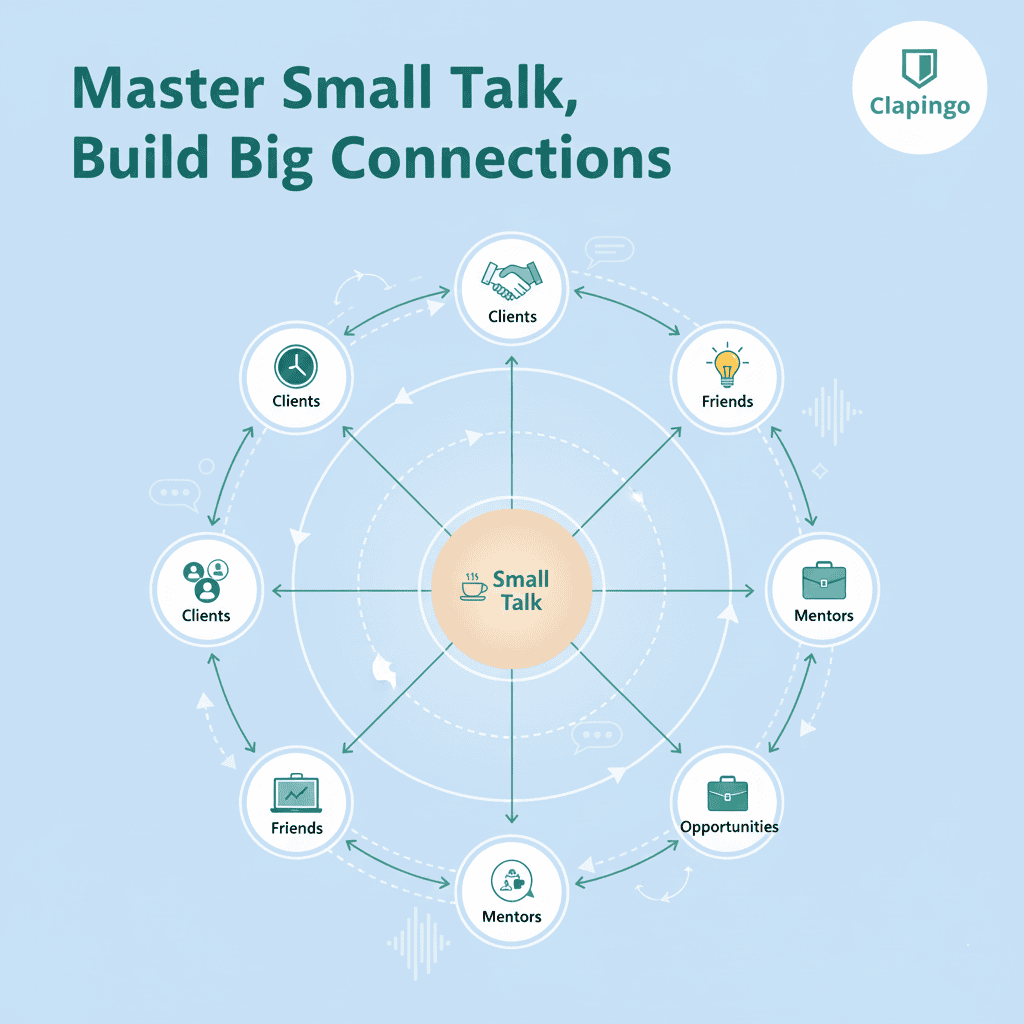
Networking is an essential skill for professionals across all industries. Attending conferences, business events, or corporate gatherings provides the perfect opportunity to build valuable connections. However, effective communication in such scenarios often hinges on mastering professional small talk and Networking English. This blog will guide you through strategies, examples, and techniques to excel at Conference communication, make impactful introductions, and leverage ice breakers to create lasting impressions.
Why Small Talk Matters
Small talk is more than casual chatting; it is the gateway to professional relationships. It helps:
Build rapport and trust with colleagues, clients, and industry peers.
Make a positive first impression in conference communication.
Open doors for collaborations, partnerships, and career growth.
Even if you’re introverted, mastering Networking English can help you navigate conversations with confidence.
The Fundamentals of Networking English
Networking English involves using clear, concise, and polite language to interact with professionals. Key elements include:
Polite Greetings and Introductions
Example: "Hello, I’m Keya. I work in digital marketing. How about you?"
Practice dialogue:
Person A: "Hi, I’m Raj, in software development. Nice to meet you."
Person B: "Hello Raj, I’m Keya. I’m curious about how technology is transforming marketing."
Tip: Smile and maintain eye contact.
Expressing Interest
Ask open-ended questions to keep the conversation flowing.
Example: "What do you find most exciting about this conference?"
Practice dialogue:
Person A: "I’m excited about the AI panel. Have you attended similar sessions before?"
Person B: "Yes, last year I attended a workshop on AI ethics. I’m looking forward to this one too."
Active Listening
Nod, paraphrase, and respond thoughtfully.
Helps in demonstrating genuine interest and builds professional rapport.
Appropriate Vocabulary
Use professional terms relevant to your field.
Avoid slang and overly casual language.

Crafting the Perfect Ice Breaker
Ice breakers are conversation starters that help initiate dialogue in business events and conferences. A few strategies include:
Compliment or Observation: "I really liked your presentation on AI innovations. Could you elaborate on the challenges you mentioned?"
Common Interests: "I noticed we both attended the marketing trends session earlier. Which insight did you find most useful?"
Humor (light and professional): "I hope the coffee here is as strong as the networking opportunities!"
Ice Breaker Examples
Mastering Conference Communication
Conference communication requires balance—being friendly yet professional. Key tactics include:
Preparation is Key
Research attendees, speakers, and session topics.
Prepare a few conversation starters or questions.
Practice dialogue:
Person A: "I saw your company recently launched a new AI product. How has the response been so far?"
Person B: "It’s been positive! We’re excited about the potential impact in marketing."
Introduce Yourself Confidently
State your name, role, and professional interest succinctly.
Example: "I’m Keya, a communications strategist focusing on international markets. I’m keen to learn how AI is shaping marketing globally."
Steer Conversations Gracefully
Listen, then respond with relevant insights.
Transition naturally between topics to avoid awkward pauses.
Example: "Speaking of AI, have you noticed any trends in consumer engagement in your sector?"
Follow-up
Exchange business cards or connect via LinkedIn.
Mention a specific point from your conversation to personalize follow-up messages.
Overcoming Networking Anxiety
Many professionals feel nervous in business events. Networking English can help ease anxiety. Strategies include:
Practice Conversations: Role-play scenarios with a friend or coach.
Set Small Goals: Aim to engage with 3–5 new people per event.
Use Prepared Phrases: Keep go-to questions or comments ready.
Example: "What’s the most interesting project you’re working on currently?"
Positive Mindset: Focus on learning and exchanging ideas, not just making contacts.
Clapingo Tip: Clapingo offers personalized practice sessions to boost your confidence in professional small talk.
Professional Small Talk Topics
Having a repertoire of safe and engaging topics can make your Networking English more effective.
Industry Trends: "I read that digital transformation is accelerating in retail. How is your company approaching this?"
Conference Sessions: "Which session did you find most insightful today?"
Career Journeys: "How did you get started in your field?"
Travel and Logistics: "How are you finding the city? Any recommendations for evening networking spots?"
Technology & Innovation: "Have you tried any new tools or software lately in your work?"
Books and Learning: "Have you read any insightful books or articles relevant to our industry recently?"
Important Tip: Avoid controversial topics such as politics or religion in professional settings.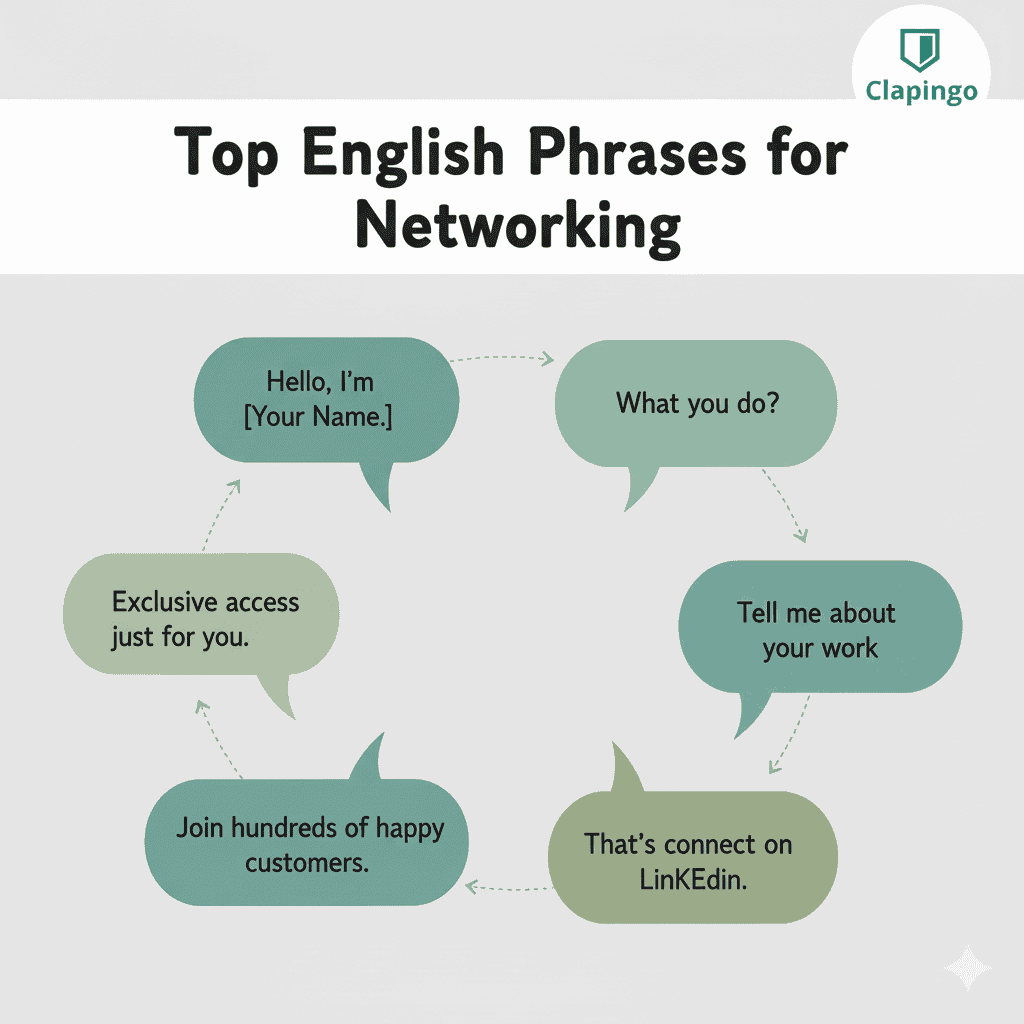
Essential Phrases for Networking English
Here’s a list of practical phrases for Conference communication:
"It’s great to meet you. I’ve heard a lot about your work in [industry]."
"What brought you to this event?"
"I’d love to hear more about your approach to [topic]."
"Could you recommend any sessions or speakers here?"
"Would you like to connect on LinkedIn and continue this conversation?"
Expanded dialogue example:
Person A: "I really liked your insights on sustainable marketing. How do you see this trend evolving?"
Person B: "It’s becoming central to brand strategy. We’ve recently started integrating eco-friendly campaigns."
Clapingo Tip: Using phrases naturally and appropriately demonstrates fluency in Networking English.
The Role of Body Language
Non-verbal communication is a powerful aspect of professional small talk.
Smile and Maintain Eye Contact: Shows confidence and friendliness.
Open Posture: Avoid crossing arms; face your conversation partner.
Mirroring: Subtly mimicking gestures can build rapport.
Practice Dialogue:
Person A: Smiling and nodding while Person B talks.
Person B: Adjusts tone based on A’s engagement, creating a positive feedback loop.
Did You Know?
Studies suggest that 55% of communication impact comes from body language and tone rather than words.
Leveraging Technology for Networking
Digital tools can enhance your networking experience:
Event Apps: Connect with attendees and schedule meetings.
LinkedIn: Follow up and maintain professional relationships.
Virtual Conferences: Prepare short, engaging introductions and use chat features to initiate conversations.
Practice dialogue:
Person A (virtual): "Hi, I’m Keya from marketing. I enjoyed your comments in the chat. Could we discuss your strategies further?"
Person B: "Absolutely! Let’s schedule a call after the session."
Clapingo Tip: Practice virtual networking with tailored sessions to boost confidence in both online and offline settings.
Common Mistakes and How to Avoid Them
Overloading on Personal Details: Keep the conversation professional.
Interrupting or Dominating: Ensure balanced dialogue.
Neglecting Follow-ups: Always connect post-event.
Using Jargon Excessively: Ensure language is clear to all attendees.
Ignoring Non-Verbal Cues: Pay attention to body language and social cues.
Tip: Clapingo offers coaching sessions to refine your professional small talk and correct common errors.
Tips and Tricks for Networking Success
Prepare a 30-second elevator pitch.
Listen more than you speak.
Find common ground quickly.
Maintain eye contact and smile.
Take notes discreetly to remember key details.
Rotate conversations evenly at larger events.
Use humor lightly to break tension.
Ask insightful questions based on observations.
Clapingo Spotlight
Clapingo provides tailored training for Networking English and professional small talk. Key benefits include:
Personalized coaching sessions
Industry-specific vocabulary practice
Role-playing exercises for conference scenarios
Feedback on body language, tone, and phrasing
Practice in both offline and virtual networking environments
Start your networking journey with Clapingo today and turn every conference into an opportunity!
10 Golden Rules of Networking English
Sections to Include:
Greeting Right: Always start with a smile and confident introduction.
Ask Before You Tell: Encourage two-way conversations.
Keep It Light: Choose safe, engaging topics.
Be Curious: Ask open-ended questions.
Mind Your Body Language: Posture, eye contact, and gestures matter.
Practice Active Listening: Respond thoughtfully, not mechanically.
Avoid Over-Talking: Balance is key.
Follow Up Quickly: Within 48 hours after the event.
Be Yourself: Authenticity builds trust.
Keep Learning: Practice with mentors or platforms like Clapingo.
Top 5 Ice Breakers for Conferences

Small Talk Survival Kit
Items in the Kit:
A Smile: Universal ice breaker
Business Card: For quick follow-ups
Notebook or Notes App: Jot down names and key facts
Polite Phrases: Keep a few ready (e.g., “That’s an interesting point”)
Confidence: The most important tool
Body Language Dos and Don’ts for Networking
Your body speaks before you do. Master the non-verbal language of networking!
Quick Practice Dialogues
Scenario 1: Conference Registration Desk
A: “Hi, I’m Neha. Is this your first time attending this conference?”
B: “Yes! I’ve heard great things about it. How about you?”
A: “It’s my second year. The networking sessions are always amazing.”
Scenario 2: During Coffee Break
A: “That last session on leadership was insightful, wasn’t it?”
B: “Absolutely. I loved the part about emotional intelligence. Are you attending the next one?”
Scenario 3: After a Presentation
A: “You raised an interesting question during the Q&A. I’d love to know more about your work.”
B: “Thank you! I work in organizational behavior. I’m researching cross-cultural leadership.”
Scenario 4: Virtual Event Chat
A: “Hi everyone, I’m Arjun from Clapingo. Excited to learn about cross-border collaboration!”
B: “Nice to meet you, Arjun. Your comment about team synergy really resonated with me.”
Scenario 5: Business Dinner
A: “It’s great to unwind after a long day of sessions. Have you tried the dessert yet?”
B: “Not yet, but it looks tempting! What did you think of the keynote speaker earlier?”
Why Networking English Matters in Your Career
Networking English isn’t just about words—it’s about confidence, clarity, and connection. Whether you’re at a startup mixer, a global conference, or an office party, your ability to engage in small talk can shape career opportunities. Many professionals miss chances because they hesitate to start conversations or struggle to express ideas naturally in English.
Example:
"Hi, I really enjoyed your presentation on digital marketing. How do you see AI shaping the future of campaigns?"
That one line could lead to a valuable contact or collaboration.
Pro Tip: Don’t wait for someone to approach you. Take initiative with openers like “What brings you here?” or “How’s your experience at this event so far?”
Clapingo Insight: On Clapingo, learners practice realistic networking conversations with tutors who simulate real events—so your confidence grows before you step into the room.
The Psychology of Small Talk
Small talk may seem superficial, but it builds emotional trust. English speakers often use it to test warmth and compatibility before discussing business.
The Purpose of Small Talk
Tip: Think of small talk as relationship scaffolding—it supports stronger, future conversations.
Common English Phrases to Start Conversations Naturally
Here are tried-and-tested openers used in professional networking:
“What did you think of the keynote?”
“I’ve been meaning to connect with people in your industry.”
“Is this your first time attending this event?”
“The catering here is great, isn’t it?”
Dialogue Example:
A: “That was a fascinating panel on design thinking.”
B: “Absolutely. I liked how they linked creativity to data.”
Notice the shift from casual to engaging, without forcing the talk.
Cultural Nuances in Business Networking
Every culture has its rhythm of small talk. In India, it’s common to discuss family or food. In the US, weather and hobbies are safe zones. In Japan, humility and polite curiosity dominate.
Do’s and Don’ts:
Clapingo Tip: Clapingo’s tutors from diverse backgrounds help learners adapt to these global differences through mock networking drills.
How to Remember Names and Make People Feel Valued
Remembering names builds trust instantly. Use the name once during introduction and repeat it naturally.
Technique:
Repeat: “Nice to meet you, Rahul.”
Associate: Link it with something memorable (“Rahul from robotics!”)
Use again later: “Rahul, did you try the AR demo yet?”
Body Language and Tone in Networking English
Your tone and body language communicate confidence even before your words do.
Checklist:
Maintain open posture
Speak with a friendly tone
Use gestures naturally
Avoid crossing arms or looking distracted
Example: A simple nod and smile while someone speaks signals attentiveness.
How to Exit a Conversation Gracefully
Sometimes you need to move on without sounding rude.
Phrases to Use:
“It’s been great chatting, I should let you connect with others too.”
“Let’s exchange LinkedIn profiles before I head to the next session.”
Clapingo Tip: Always exit with appreciation, it leaves a positive memory.
Handling Awkward Silences Like a Pro
Silences happen—even in great conversations.
Tricks:
Ask an open-ended question.
Bring up the event topic again.
Compliment something specific: “That’s a great notebook! Do you journal often?”
Humour can also rescue the moment: “Looks like we both ran out of caffeine and conversation!”
How to Introduce Colleagues at Events
Introductions reflect social intelligence.
Example:
“Priya, this is David—he leads our design team. David, Priya’s been working on user research for our latest app.”
Notice how context adds meaning and helps both people connect faster.
Email Follow-Ups After Networking Events
Follow-up emails turn fleeting chats into future opportunities.
Template:
Subject: Great Connecting at the Design Summit
Hi [Name],
I really enjoyed our chat about UX trends at the conference. Let’s schedule a 15-minute call next week to explore collaboration ideas.Best,
[Your Name]
How to Give and Receive Compliments in Professional English
Giving genuine compliments makes you memorable.
Examples:
“I liked your insights on sustainability—it was refreshing.”
“You explained that concept so clearly.”
When receiving compliments, avoid rejecting them. Instead, say: “Thanks, that means a lot.”
Virtual Networking Events: English Etiquette on Zoom or LinkedIn
Online events demand crisp English and camera confidence.
Rules:
Mute when not speaking
Keep introductions short (30 seconds max)
Use active phrases: “I completely agree,” “That’s an interesting angle.”
Example:
“Hi everyone, I’m Anita from Clapingo. I help professionals enhance spoken English for international networking.”
Elevator Pitch Refinement in English
You have 30 seconds to make an impression. Structure your pitch:
Formula: Who you are + What you do + Why it matters
Example:
“I’m Rohit, a financial analyst focused on sustainable investing. I help startups attract green funding through data-driven insights.”
English Phrases to Transition from Small Talk to Business Talk
Smooth transitions prevent awkward jumps.
Examples:
“Speaking of your project, I’d love to hear more about your strategy.”
“That reminds me—how does your team handle scaling?”
Tip: Always bridge casual topics with curiosity, not abruptness.
Common Mistakes in Networking English (and How to Fix Them)
Active Listening and Response Strategies
Listening is as important as speaking.
Phrases That Show Attentiveness:
“That’s a great point.”
“Could you tell me more about that?”
“I can totally relate to that experience.”
Clapingo Drill: Practice active listening exercises with live feedback to refine your tone and empathy.
Building Rapport Through Shared Interests
People bond faster over common hobbies, causes, or goals.
Example:
“Oh, you’re into photography too? I love capturing cityscapes!”
Shared interests make future interactions smoother.
Follow-Up Meeting Language
Polite English phrases for scheduling:
“Would next Wednesday work for you?”
“I’ll send over a quick calendar invite.”
“Looking forward to continuing this discussion.”
Networking English for Introverts
Introverts can network effectively by preparing phrases in advance.
Tips:
Set small goals (talk to 3 people)
Have questions ready
Take breaks between conversations
Practice Example:
“I’m more of a listener, but I’m curious—what inspired you to join this field?”
The Clapingo Method for Confident Networking English
Clapingo helps professionals transform their small talk into powerful communication through:
Live 1:1 English sessions with expert tutors
Event simulation drills for networking and interviews
Personalized fluency feedback
Ready to build real connections with confidence?
Practice Networking English live with experts on Clapingotoday.
Did You Know?
70% of business deals start through casual small talk.
People remember your tone and energy more than exact words.

Tips & Tricks
Mirror the other person’s energy subtly.
Focus on listening to understand, not replying fast.
Record and review your Clapingo sessions to identify natural improvements.
Final Takeaway
Every conversation at a conference is an opportunity. The more you practice Networking English, the easier small talk becomes. Whether you’re attending in person or online, your tone, confidence, and clarity can set you apart.
Clapingo helps professionals practice real-world English scenarios, including small talk, presentations, and professional communication. With guided sessions, expert tutors, and personalized feedback, you’ll never fear a networking moment again.
✨Start your journey to confident conversations today at www.clapingo.com ✨
Read Also: Workplace English: 10 Best Communication Skill Tips for Career Success